
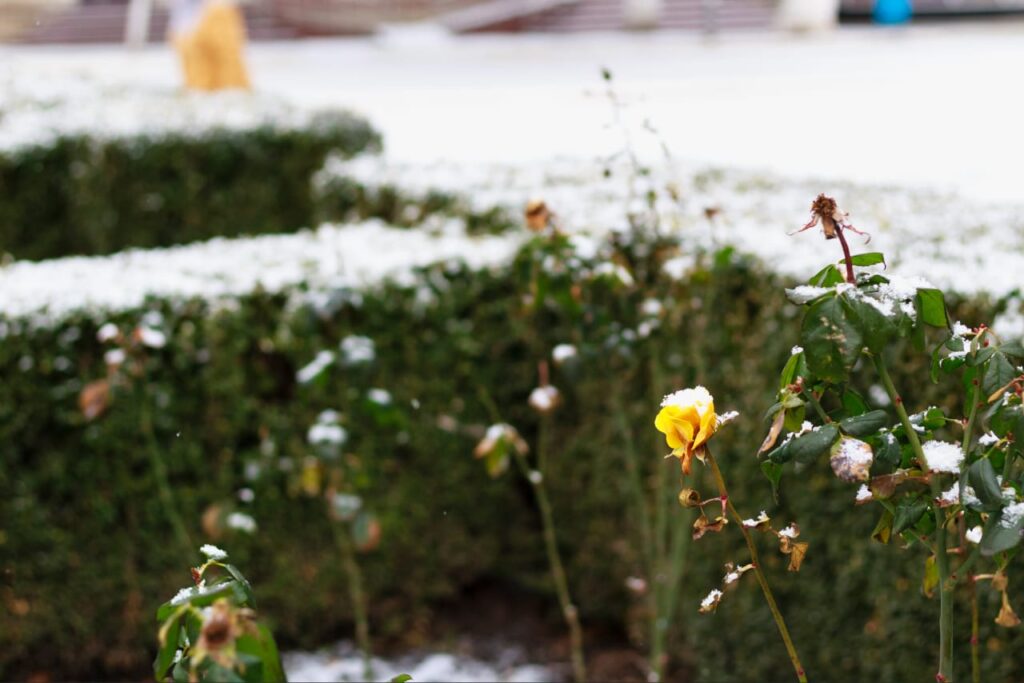
Desiccation is when plants lose moisture faster than their roots can replace it, usually because of cold wind, dry air, and frozen soil. A few simple steps, like watering before the ground freezes and adding mulch, can keep your winter garden healthy all season.
Even healthy, well-established plants can struggle once winter sets in. Cold temperatures, dry winter air, and gusty winds all pull moisture from leaves and needles faster than frozen roots can resupply it.
Without help, this stress can leave your garden looking scorched and brittle by spring. We’ll walk you through a few simple precautions that can keep your plants protected.
What Is Desiccation?
This happens when a plant loses water through its leaves or needles faster than its roots can take in more. Plants constantly release small amounts of moisture through a process called transpiration. In winter, frozen soil blocks roots from absorbing water, but transpiration doesn’t fully stop, so plants can dry out quickly.
Evergreens are especially vulnerable because they keep their foliage through winter, giving wind and sun constant surface area to pull moisture from. Newly planted trees and shrubs are also at risk, since their root systems haven’t fully developed and can’t absorb water as efficiently as established plants.
What Causes Winter Desiccation?
A mix of environmental factors works together to stress plants during the colder months. Here’s what typically contributes to the problem:
- Cold, Dry Air: Cold winter air holds very little moisture, which pulls water from plant tissue through evaporation.
- Winter Winds: Strong winds speed up moisture loss from leaves and needles, similar to how a hair dryer dries hair faster than still air.
- Frozen Soil: Once the ground freezes, roots can’t draw up water, even when moisture is present in the soil.
- Sun Exposure and Fluctuating Temperatures: Bright winter sun warms plant tissue during the day, increasing water loss, while freezing nights lock moisture away in frozen ground.
- Lack of Moisture Before or During Winter: Plants that enter winter already dehydrated have fewer reserves to draw from when conditions turn harsh.
Signs of Desiccation in Plants
Catching damage early can help you adjust your care before it worsens. Watch for these common warning signs:
- Brown or scorched foliage
- Wilted or drooping leaves
- Dry, brittle branches or stems
- Evergreen needles turning brown
- Damage that becomes more noticeable as winter progresses
How to Prevent Desiccation in Your Winter Garden
Prevention is far easier than recovery. These proactive steps can help your plants make it through winter unscathed.
Water Plants Before the Ground Freezes
Give your plants a deep, thorough watering in late fall, before the soil freezes solid. This helps roots store moisture they can draw on when winter conditions set in.
Add a Layer of Mulch
A two- to three-inch layer of organic mulch around the base of plants helps retain soil moisture and insulate roots. Keep mulch a few inches away from stems and trunks to avoid trapping excess moisture against the bark.
Protect Plants From Winter Winds
Windbreaks, burlap screens, or other barriers can shield vulnerable plants from harsh gusts. This is especially helpful for evergreens and shrubs planted in exposed, open areas.
Choose Plants Suited to Your Climate
Cold-hardy plants are naturally better equipped to handle your area’s winter conditions. Choosing species suited to your climate reduces the risk of winter damage from the start.
Avoid Excessive Pruning Before Winter
Leaving healthy growth intact going into winter gives plants more foliage to help regulate moisture loss. Save heavier pruning for late winter or early spring instead.
How to Help Your Winter Garden Recover From Damage
Once the worst of winter passes, it’s time to assess any damage and help your plants bounce back. With patience and the right care, most plants recover fully by the following growing season.
- Assess Damage Once Temperatures Warm Up: Wait until new growth appears before deciding what needs attention.
- Avoid Immediately Removing Damaged Growth: Brown foliage can still protect healthy wood underneath from further cold snaps.
- Resume Appropriate Watering: Start watering again once the soil thaws and rainfall becomes inconsistent.
- Prune Dead or Damaged Branches When Appropriate: Wait for clear signs of new growth, then trim back to healthy wood.
Let Stoeckig Help Your Garden Thrive This Winter
Protecting your winter garden from desiccation takes a little planning and a lot of knowledge. At Stoeckig Landscape Group, we’ve spent over 20 years helping Georgia homeowners design landscapes built to hold up through every season, including winter’s harshest stretches.
From selecting cold-hardy plants to recommending the right mulch and windbreaks for your property, our team is happy to answer your questions and help your outdoor space look its best year-round. Reach out to Stoeckig Landscape Group today to get started!